
Bradford Pear Trees in Cabarrus County: Why They Split and When to Remove Them
Planted by the thousands in post-2000 Harrisburg and Concord subdivisions, Bradford pears are notorious for splitting in half under modest wind or ice. Here is why their anatomy fails and why removing them early saves thousands in damage.
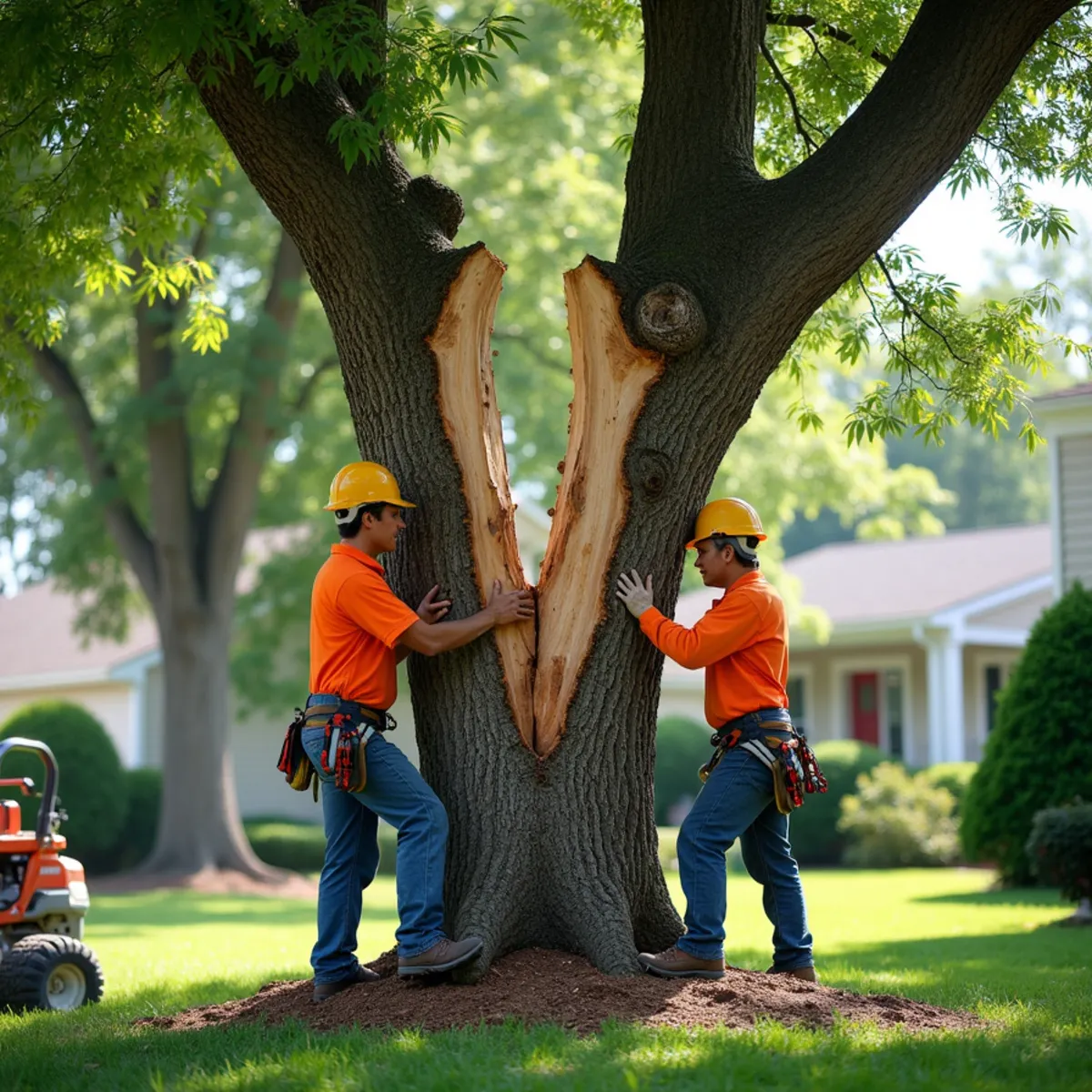
The Anatomical Flaw: Why Every Bradford Pear Eventually Splits
Drive through almost any residential master-planned subdivision built between 1995 and 2015 in Concord, Harrisburg, or Midland—such as Stallings Farm, Canterfield Estates, or Moss Creek—and you will see mature Bradford pears (Pyrus calleryana). Originally bred in the mid-20th century as a fast-growing, sterile ornamental shade tree, the variety suffers from a fatal biological flaw:
| Structural Characteristic | Healthy Hardwood (Oak / Maple) | Bradford Pear (Calleryana) | Mechanical Consequence | |---|---|---|---| | Branch Union Geometry | Wide U-shaped crotch (45°–60°) | Acute V-shaped crotch (10°–25°) | Severe mechanical pinch point | | Bark Formation at Crooks | Raised branch bark ridge | Trapped 'included bark' between stems | Zero interlocking structural wood | | Stem Architecture | Single central dominant trunk | 8 to 15 competing co-dominant leaders | Excessive torsional leverage | | Average Structural Lifespan | 80 to 150+ years | 15 to 22 years before split failure | Guaranteed mid-life stem shearing | | Wood Grain Elasticity | High tensile flex under storm wind | Brittle, chalky cell structure | Snaps cleanly without bending |
1. Crowded Co-Dominant Stems and Narrow Branch Unions
Unlike native Carolina oaks that develop a dominant central trunk with spaced lateral branches, a Bradford pear shoots up a tight cluster of competing vertical stems from almost the exact same point on the trunk. As these stems grow upward, they crowd against one another like fingers clenched inside a tight fist.
2. The Included Bark Trap
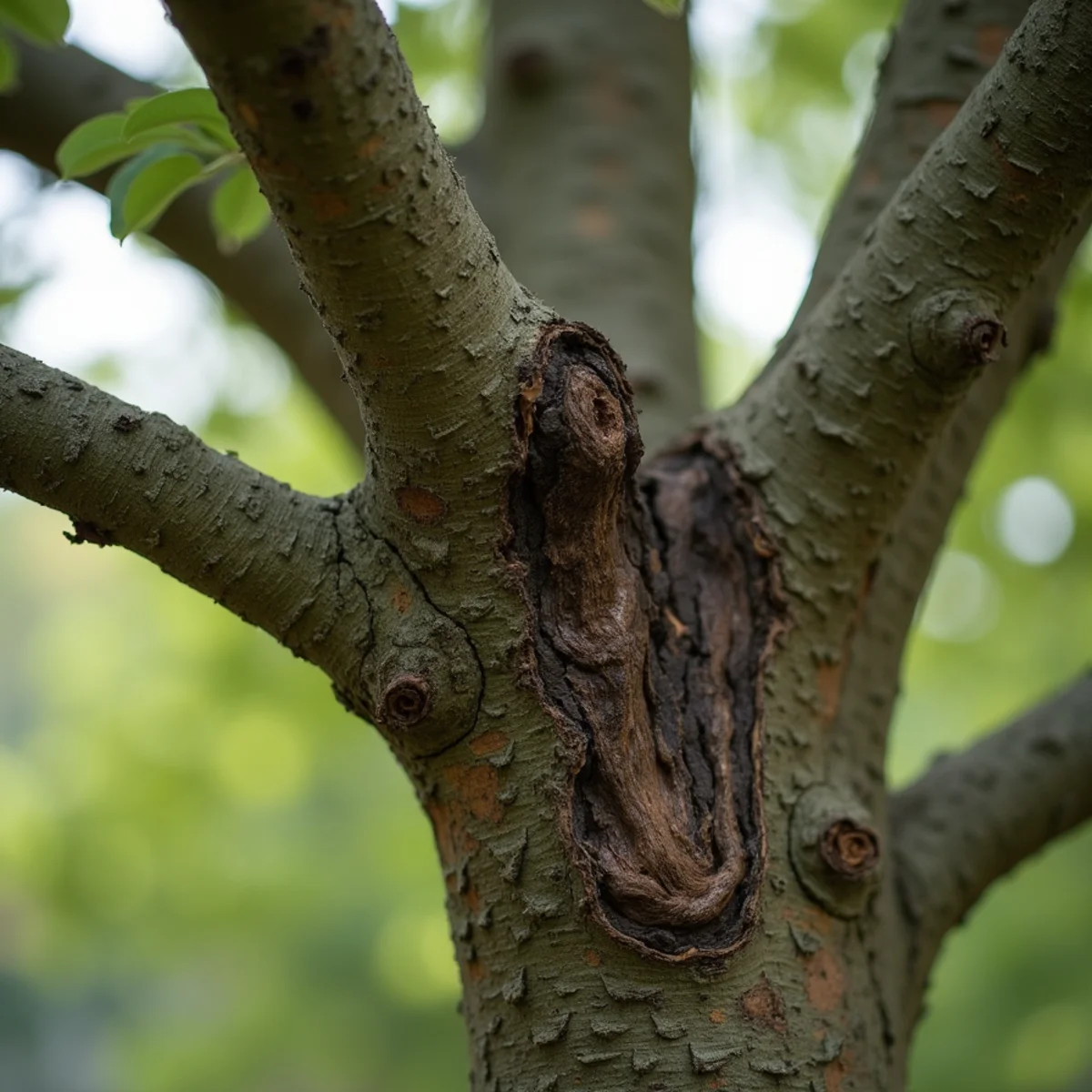
As the co-dominant stems expand in annual girth, bark becomes trapped between the pressing wood surfaces. In arboriculture, this is known as included bark. Instead of strong, interlocking wood fibers knitting the trunk together, a slick layer of dead bark separates the stems. The branches are merely leaning against each other under friction rather than forming a fused union.
3. The 15–20 Year Breaking Point
When a Bradford pear is young, the canopy is light and the weak unions hold. However, once the tree reaches 15 to 20 years old, the crown expands into a massive, top-heavy canopy. During summer thunderstorms or winter freezing rain events in Cabarrus County, wind catches the dense foliage like a solid sail. The acute V-crotches act as mechanical levers, driving the stems apart and cleanly shearing the trunk down to the soil line.
Expert Arborist Insight: Why Cabling a Bradford Pear Is a Costly Mistake
Homeowners frequently ask our arborists: Can we install steel cables or threaded bracing rods to hold our splitting Bradford pear together?
While structural cabling and bracing is an excellent preservation strategy for historic oaks or valuable sugar maples, cabling a mature Bradford pear is almost always a waste of money.
Because Bradford pears have brittle, soft wood with multiple failure points across 8 to 12 competing leaders, cabling two stems merely shifts the rotational storm stress to the adjacent uncabled unions. Furthermore, Bradford pear wood decays rapidly once drilled for hardware. Within 3 to 4 years, the wood around the anchors softens, leading to sudden failure anyway. For the $600 to $900 cost of installing an engineered multi-cable system, you can permanently remove the hazard and plant a sturdy, long-lived native Carolina hardwood.
The Ecological Threat: Why North Carolina Created the Pear Bounty
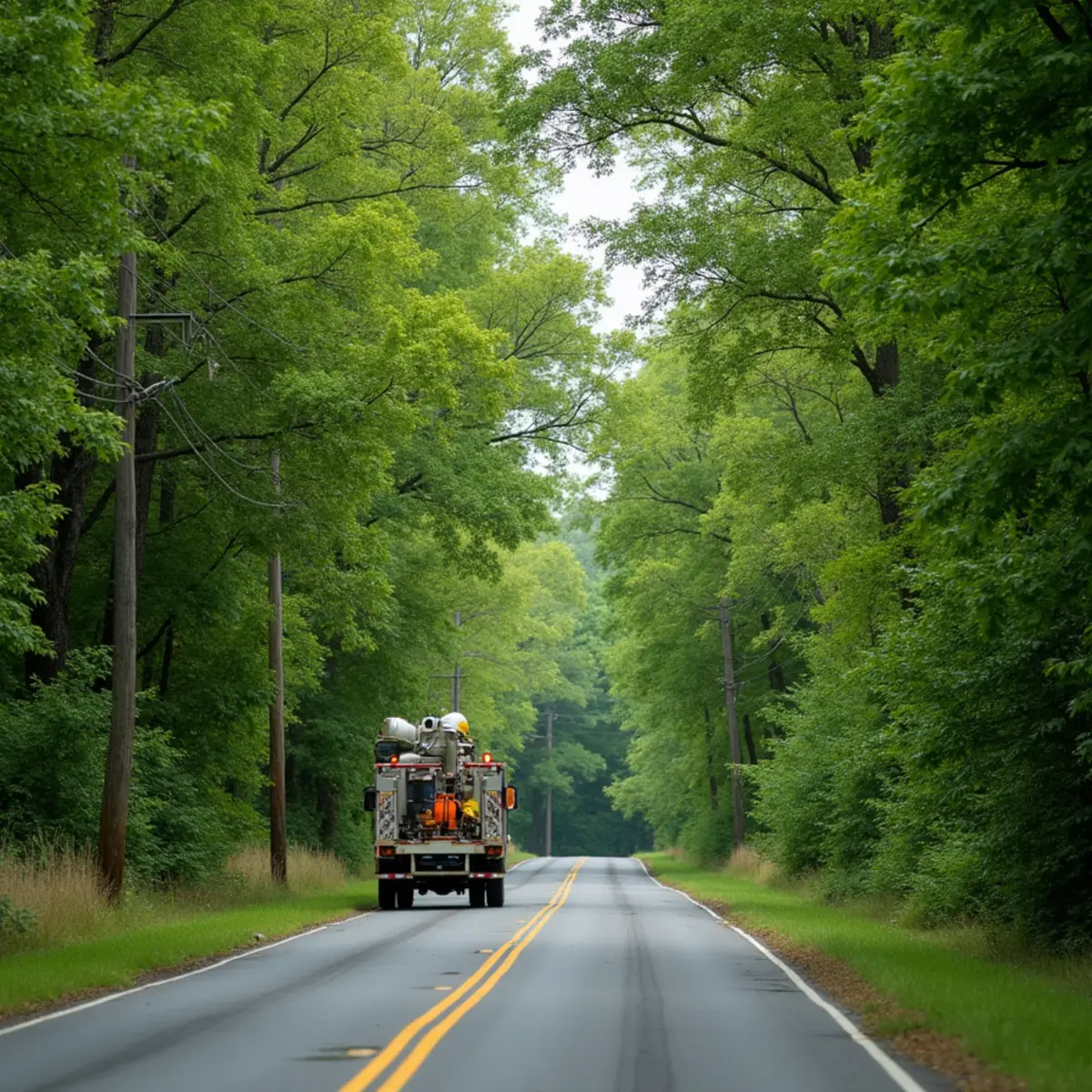
Beyond their structural failure rate, Bradford pears have escaped ornamental yards and cross-pollinated with other Callery pear cultivars, spawning wild invasive thickets across Cabarrus County and rural roadsides along US-601 and NC-24/27. These wild descendants revert to ancestral genetics, producing 2-inch thorns that puncture tractor tires and destroy wildlife habitat.
The North Carolina Forest Service and NC State Extension have actively promoted the Bradford Pear Bounty, encouraging property owners to fell their trees in exchange for free native replacement trees.
Superior Native Replacements for Cabarrus County Yards
When you remove a hazard-prone Bradford pear, replace it with a structurally sturdy species that thrives in Piedmont red clay:
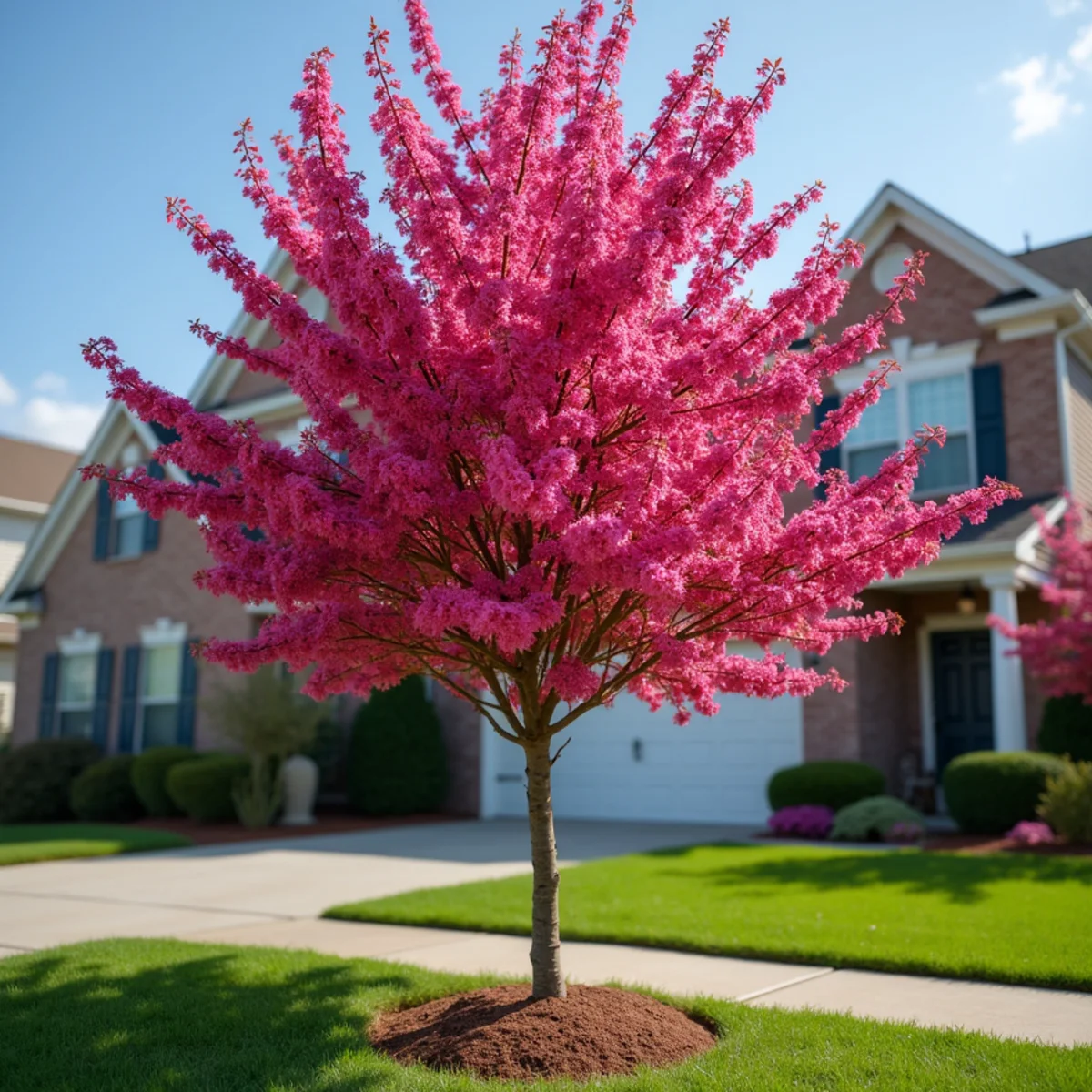
- Eastern Redbud (Cercis canadensis): Stunning magenta blooms in early spring, heart-shaped summer leaves, and strong U-shaped branch architecture that withstands ice storms. - Flowering Dogwood (Cornus florida): North Carolina's official state flower, providing brilliant spring bracts and crimson fall color without invasive seed spreading. - Serviceberry (Amelanchier arborea): Delicate white spring flowers, bird-attracting edible berries, and outstanding wind flexibility. - Overcup Oak or Red Maple: For long-term shade and property value enhancement that will stand strong for over a century.
If you have an aging or splitting Bradford pear on your property in Concord, Harrisburg, or Midland, contact Cabarrus Tree Crew at (321) 478-0689 to schedule a daytime removal and below-grade stump grinding assessment.
Field Evidence & Visual Guide
Reference photographs illustrating the key stages, biological indicators, and field equipment discussed in this article.
Need Help With a Dangerous or Fallen Tree?
Call Cabarrus Tree Crew at (321) 478-0689. Our insured local teams answer 24 hours a day, 7 days a week.
Frequently Asked Questions
Can half of a split Bradford pear survive if one side shears off?▾
How long does it take to remove a Bradford pear and grind the stump?▾
Why do Bradford pear blossoms smell so bad in early spring?▾
Does the City of Concord or HOA require a permit to remove a Bradford pear?▾
Request an On-Site Tree Estimate
For immediate emergencies (tree on house, car, or blocked road), please call directly for fastest dispatch.