Tree Cabling and Bracing vs Removal: When Can a Mature Oak Be Saved?
A large mature oak tree with a co-dominant stem or minor split does not always have to be cut down. Learn how arborist cabling and bracing systems provide structural support to preserve valuable shade trees.
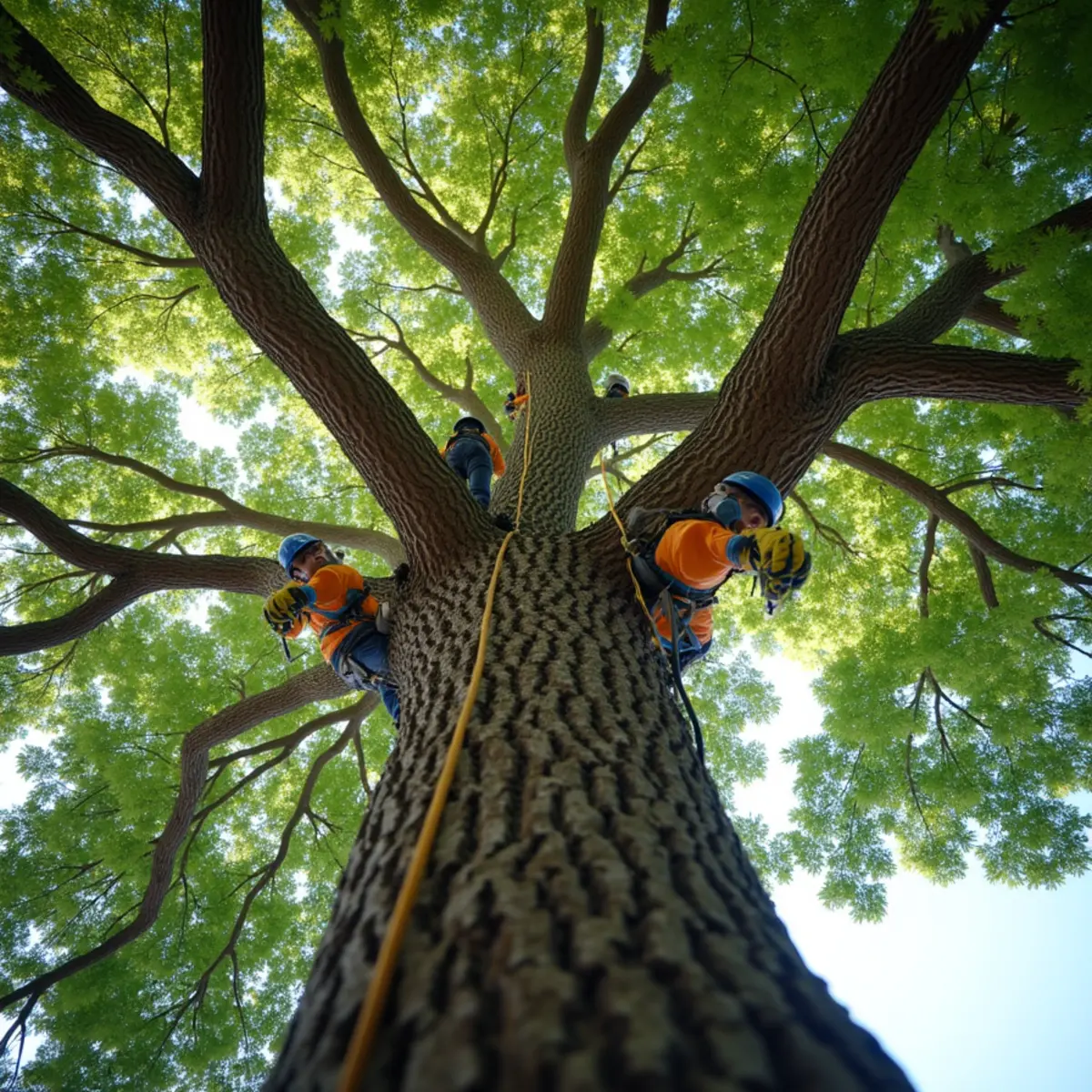
Throughout older historic neighborhoods in Concord—particularly along North Union Street, South Union Street, and downtown corridors—magnificent century-old willow oaks, white oaks, and red maples provide majestic shade and substantial property value. Many of these grand trees, however, developed multiple competing main trunks early in life, known in arboriculture as co-dominant stems.
As decades pass and each trunk reaches two to three feet in diameter, the mechanical stress at the central union becomes enormous. When a homeowner notices a vertical seam opening at the crotch or hears branches groaning during heavy Piedmont thunderstorms, panic often sets in: Must we cut down this beautiful 100-year-old tree?
Understanding how tree support systems function, when supplemental engineering is viable, and when removal is the only responsible safety choice allows property owners to protect both their trees and their homes.
---
Canopy Biomechanics: Co-Dominant Stems and Included Bark
In a naturally balanced tree with a strong central leader, lateral branches attach to the main trunk via overlapping wood collars that form an exceptionally strong mechanical joint.
When a tree develops co-dominant leaders, however, a fundamentally different biomechanical structure emerges:
- The Narrow 'V-Crotch' Trap: Two leaders of equal diameter grow side by side in a tight V-shaped angle. Instead of the wood fibers interlocking, the expanding trunks press their outer bark against each other inside the union, creating included bark. - The Internal Wedge Effect: Included bark acts like an internal mechanical wedge driven between the two trunks. The bark cannot graft together, leaving the union held together only by a thin ribbon of wood on the exterior edges. - Wind Torsion & Lever Arm Physics: In a 70-foot mature oak, each co-dominant leader acts as an independent 10-ton lever arm. During high thunderstorm gusts or heavy winter ice loading, the two stems sway in opposing directions. This differential motion creates immense rotational torque that easily shears the union apart down the center of the trunk.
---
Modern Support Engineering: Dynamic vs. Static Cabling
Arborists do not use cheap hardware-store clothesline or wire rope clamped around branches. Modern tree cabling adheres strictly to ANSI A300 (Part 3) arboricultural standards:
1. Static Steel Cabling (Extra High Strength / EHS Cable): - How It Works: Seven-strand galvanized or stainless steel EHS cable is installed in the upper two-thirds of the canopy between the co-dominant stems. - Hardware Attachment: Heavy drop-forged eye bolts or threaded steel rods are drilled directly through the center of the stem and secured on the opposite side with heavy-duty oval washers and locknuts. The tree naturally seals and compartmentalizes the clean drill hole within two seasons. - Best Application: Trees with existing stress cracks or heavy, rigid limbs that require absolute restriction of movement during ice storms. 2. Dynamic Synthetic Cabling (Cobra Systems): - How It Works: High-tenacity hollow-braid synthetic ropes (such as polyamide or polypropylene) are spliced around limbs using wide, shock-absorbing expansion inserts. - Non-Invasive Architecture: Dynamic systems require zero drilling into the wood. The synthetic rope incorporates a built-in shock damper that permits natural, gentle sway in light breezes (allowing the tree to build natural wind-firm reaction wood) but cushions and restricts violent snap-back during severe storm microbursts.
---
Lower Trunk Reinforcement: Threaded Steel Bracing Rods
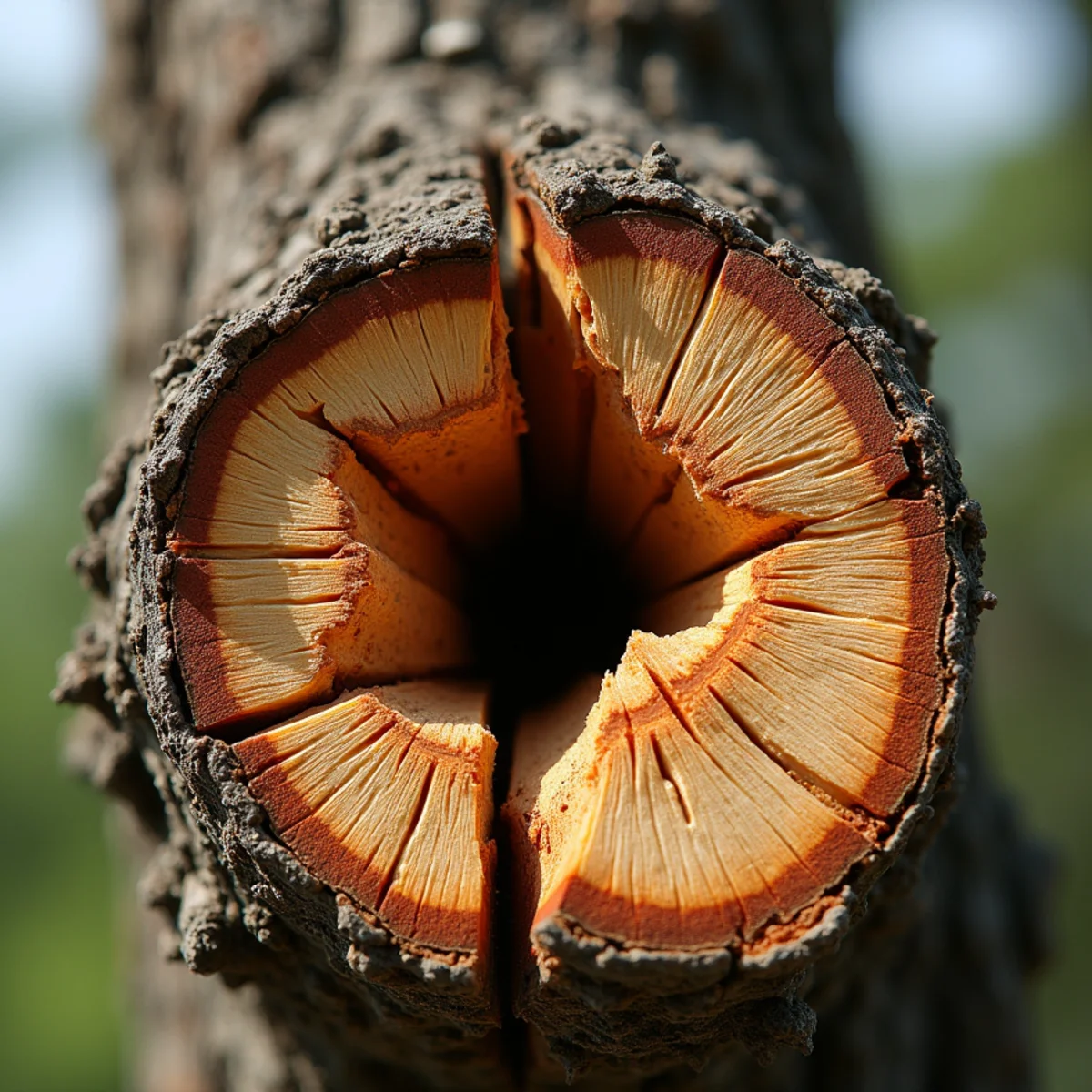
When an active vertical split or separation crack has already begun forming at the base of the crotch union, cabling alone is insufficient. The lower junction requires mechanical bracing rods:
- Through-Bolted Architecture: Heavy, high-tensile threaded steel rods (typically 5/8-inch to 1-inch diameter) are drilled completely through the split junction perpendicular to the crack. - Compression Fastening: Heavy steel aircraft washers and hex nuts are torqued down on both sides, mechanically drawing the two split halves firmly together and eliminating friction movement. - Triangulated Engineering: Bracing rods at the bottom work in tandem with flexible cables installed high in the canopy, neutralizing mechanical tension across the entire vertical height of the tree.
---
Preservation vs. Removal Decision Matrix
| Structural Condition | Internal Decay Level | Root Plate Health | Recommended Intervention | |---|---|---|---| | Clean V-crotch, no crack, minor sway | 0% (100% sound wood) | Firm, no heave or soil lifting | Dynamic Synthetic Cabling + Crown Thinning | | Visible vertical fissure, tight union | Minor (<15% heartwood decay) | Stable red clay anchorage | Static EHS Cabling + Threaded Bracing Rods | | Deep crotch split with fungal conks | Moderate to Severe (>30% rot) | Decayed or hollow heartwood | Controlled Crane Removal (cabling structurally unsafe) | | Co-dominant stem leaning over bedroom | Sound wood, but high target risk | Saturated soil / minor root heave | Selective Stem Removal or Full Tree Dismantling | | Mature Bradford Pear with split trunk | Inherently brittle wood structure | Variable | 100% Removal (cabling fails in brittle pear wood) |
---
When Removal Is the Only Responsible Choice
Tree support systems are designed to supplement sound structural wood, not replace decayed or missing tissue. Cabling and bracing should never be attempted under the following conditions:
- Extensive Internal Trunk Decay: If an arborist resistance drill or sonic tomograph reveals that internal hollows or fungal rot exceed 30% to 40% of the trunk diameter, there is insufficient sound wood for bracing bolts to grip securely. - Root Plate Failure: If the ground on the windward side of the tree is lifting, cracking, or mounding during rainstorms, the failure is occurring at the soil-root interface. Cabling the top of the tree does nothing to stop the root plate from blowing out of saturated Piedmont clay. - Severe Canopy Dieback: If more than half the live foliage has died from root disease or insect infestation, spending thousands on structural cabling cannot restore the tree's health.
To have a certified arborist inspect your mature oak or hardwood in Concord, Kannapolis, Harrisburg, or Mint Hill, contact Cabarrus Tree Crew at (321) 478-0689 for an honest, safety-first structural evaluation.
Field Evidence & Visual Guide
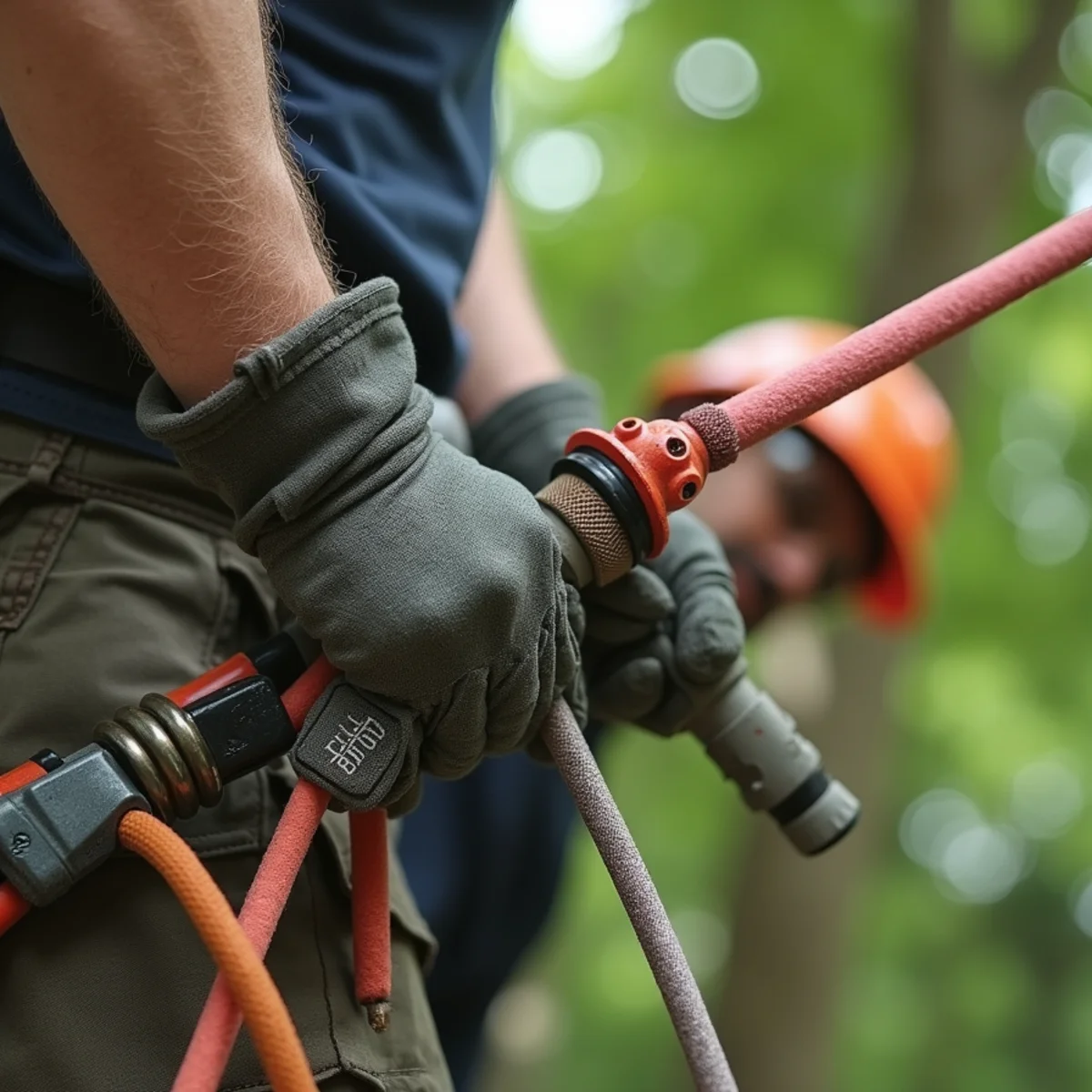
Reference photographs illustrating the key stages, biological indicators, and field equipment discussed in this article.
Need Help With a Dangerous or Fallen Tree?
Call Cabarrus Tree Crew at (321) 478-0689. Our insured local teams answer 24 hours a day, 7 days a week.
Frequently Asked Questions
Does installing cables and bracing rods hurt the tree?▾
How long do steel tree cables and bracing rods last?▾
Can a cracked tree trunk heal itself back together after being bolted?▾
How much does professional tree cabling cost in Concord, NC?▾
Request an On-Site Tree Estimate
For immediate emergencies (tree on house, car, or blocked road), please call directly for fastest dispatch.