
Emerald Ash Borer in Cabarrus County: Symptoms & Removal Urgency
The invasive Emerald Ash Borer has devastated ash tree populations across the Charlotte metro. Learn the distinct symptoms of infestation and why brittle dead ash trees must be removed before they become unclimbable.
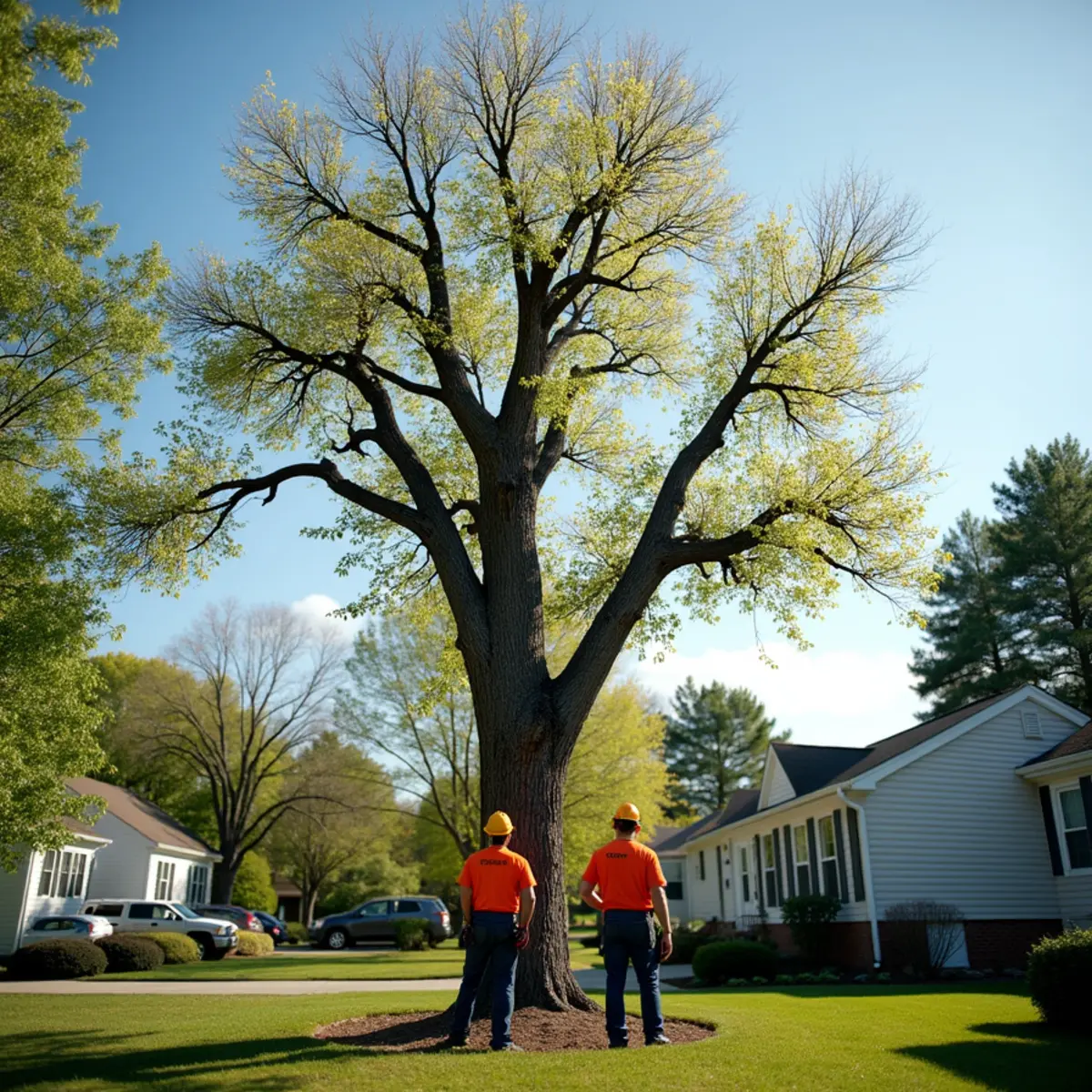
Across Concord, Kannapolis, Harrisburg, and the Rocky River basin, mature ash trees (Fraxinus americana and Fraxinus pennsylvanica) have long provided shade along riverfront buffers, suburban yards, and municipal parks. Over the past decade, however, the Emerald Ash Borer (EAB)—a metallic wood-boring beetle accidentally introduced from Asia—has swept through the North Carolina Piedmont with devastating efficiency.
Unlike native pests that co-evolved with southeastern forest ecologies, EAB faces no natural biological checks in North Carolina. For local property owners, an infested ash tree is not merely an unsightly landscape casualty; it quickly transforms into an unpredictable, high-liability structural hazard threatening homes, utility lines, and human life.
---
Invasion Biology: How Borer Larvae Girdle Ash Trees
Adult Emerald Ash Borers are small, slender beetles measuring approximately 1/2-inch in length, featuring an iridescent emerald-green exoskeleton. While adult beetles feed harmlessly on ash foliage for a few weeks in May and June, their larval offspring inflict catastrophic, lethal destruction:
1. Egg Deposition: Female beetles lay between 60 and 90 eggs in bark crevices along the upper branches and trunk. 2. Serpentine Galleries: Upon hatching, microscopic larvae chew through outer bark to reach the phloem and vascular cambium—the thin layer of living cells responsible for transporting sugars and nutrients between leaves and roots. 3. Vascular Girdling: As larvae feed, they etch wide, winding, 'S-shaped' (serpentine) feeding tunnels packed with sawdust-like frass. As hundreds of larvae feed simultaneously, they effectively sever the tree's vascular highway. 4. Hydraulic Starvation: Within two to three seasons of intense larval feeding, the tree can no longer transport water from its roots to its crown or carbohydrates down from its leaves. The canopy wilts, starves, and dies from the top down.
---
The 5 Signature Symptoms of EAB Infestation in Cabarrus County
Detecting EAB in its initial first year is notoriously difficult because feeding occurs high in the upper crown. By year two or three, however, the tree displays five unmistakable diagnostic symptoms:
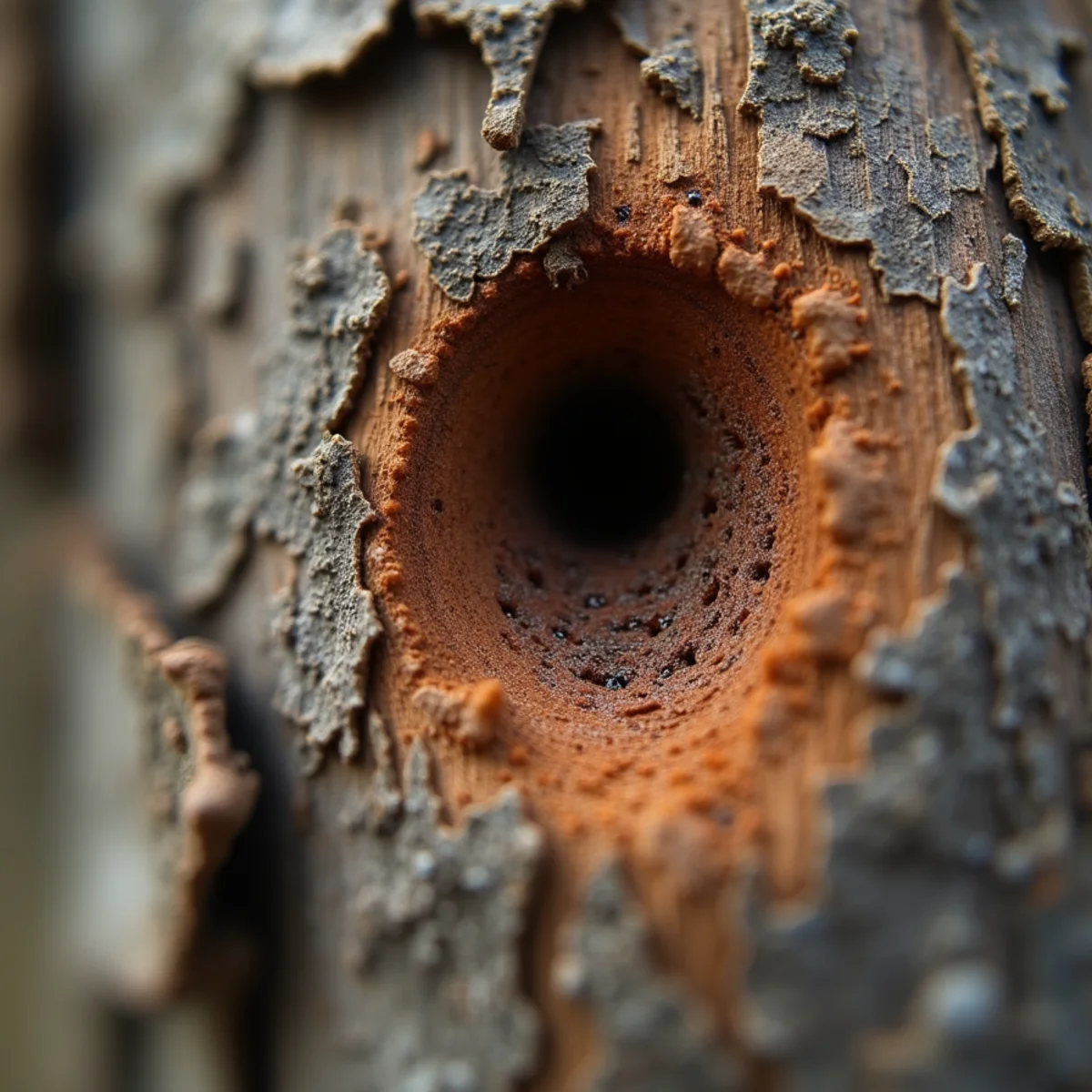
- 1. Upper Crown Thinning & Staging Dieback: The topmost branches lose leaves first, leaving a bare, skeletal branch structure at the apex of the canopy while lower branches remain green. - 2. Characteristic 1/8-Inch 'D-Shaped' Exit Holes: As mature adult beetles chew their way out of the trunk from May through July, they leave an unmistakable exit hole shaped like a capital letter 'D'—flat on one side and curved on the other. - 3. Woodpecker 'Blonding' / Flecking: Native North Carolina woodpeckers (including downy, hairy, and pileated woodpeckers) possess acute hearing and can detect larvae feeding under the bark. Woodpeckers chip away the dark gray outer bark to feed, exposing pale, creamy inner bark. A trunk that appears mottled or 'blonded' from a distance is heavily infested. - 4. Dense Basal Water Sprouts (Epicormic Shoots): In a desperate survival response, the choking tree pushes out dense clusters of leafy suckers and shoots directly from the lower trunk base and root flare. - 5. Vertical Bark Splits: As the tree's cambium tissue dies beneath the bark, drying tension causes long, vertical cracks to open along the trunk, often revealing larval serpentine galleries underneath.
---
The Cellular Embrittlement Hazard: Why Dead Ash Cannot Be Climbed
When common native trees like white oaks or loblolly pines die, their structural heartwood retains cellular moisture and mechanical elasticity for one to two years, allowing experienced tree climbers to ascend and rig sections safely.
Ash trees killed by Emerald Ash Borer behave completely differently:
- Loss of Lignin Flexibility: The disruption of the vascular cambium causes the wood to desiccate at an abnormal, accelerated rate. The structural fibers lose all tensile strength and elasticity. - Glass-Like Sudden Shatter: Dead ash branches do not bend or groan under stress; they snap cleanly with zero warning under their own weight. Heavy limbs frequently sheer off on completely calm, windless days. - The 'Unclimbable' Classification: Arborist safety standards (ANSI Z133) prohibit climbers from ascending dead ash trees or setting rigging ropes in their crowns. A climber's body weight, combined with the dynamic kinetic load of lowering a cut limb, can cause the entire upper tree or main spar to snap in half. - Explosion of Removal Costs: If an ash tree is dismantled while still living or in early decline, a standard bucket truck crew can take it down affordably. If the homeowner waits until the tree is 100% dead and brittle, the only safe removal method requires deploying a 100-ton crane or remote knuckleboom grapple saw, easily doubling or tripling the project cost.
---
Ash Tree Decision Matrix: Treat or Remove?
| Visual Canopy Condition | Infestation Stage | Structural Safety Level | Recommended Arboricultural Action | |---|---|---|---| | >70% Healthy Green Canopy | Early / Initial Strike | High structural integrity | Candidate for Trunk Injections (Systemic Emamectin Benzoate applied every 2 years) | | 50% to 70% Live Foliage | Moderate Infestation | Fair / Monitor Closely | Professional evaluation; treatment may preserve tree if high historical value | | <50% Canopy Remaining | Severe Vascular Girdling | Compromised / High Risk | Mandatory Removal; vascular tissue cannot distribute insecticide | | 100% Dead / Leafless | Complete Mortality | Extremely Hazardous / Unclimbable | Immediate Emergency Crane Extraction before structural collapse |
---
Advanced Crane & Aerial Rigging Removal Protocols
Dismantling a structurally compromised ash tree adjacent to a home in Concord or Harrisburg requires specialized engineering. Cabarrus Tree Crew utilizes modern mechanized removal strategies:
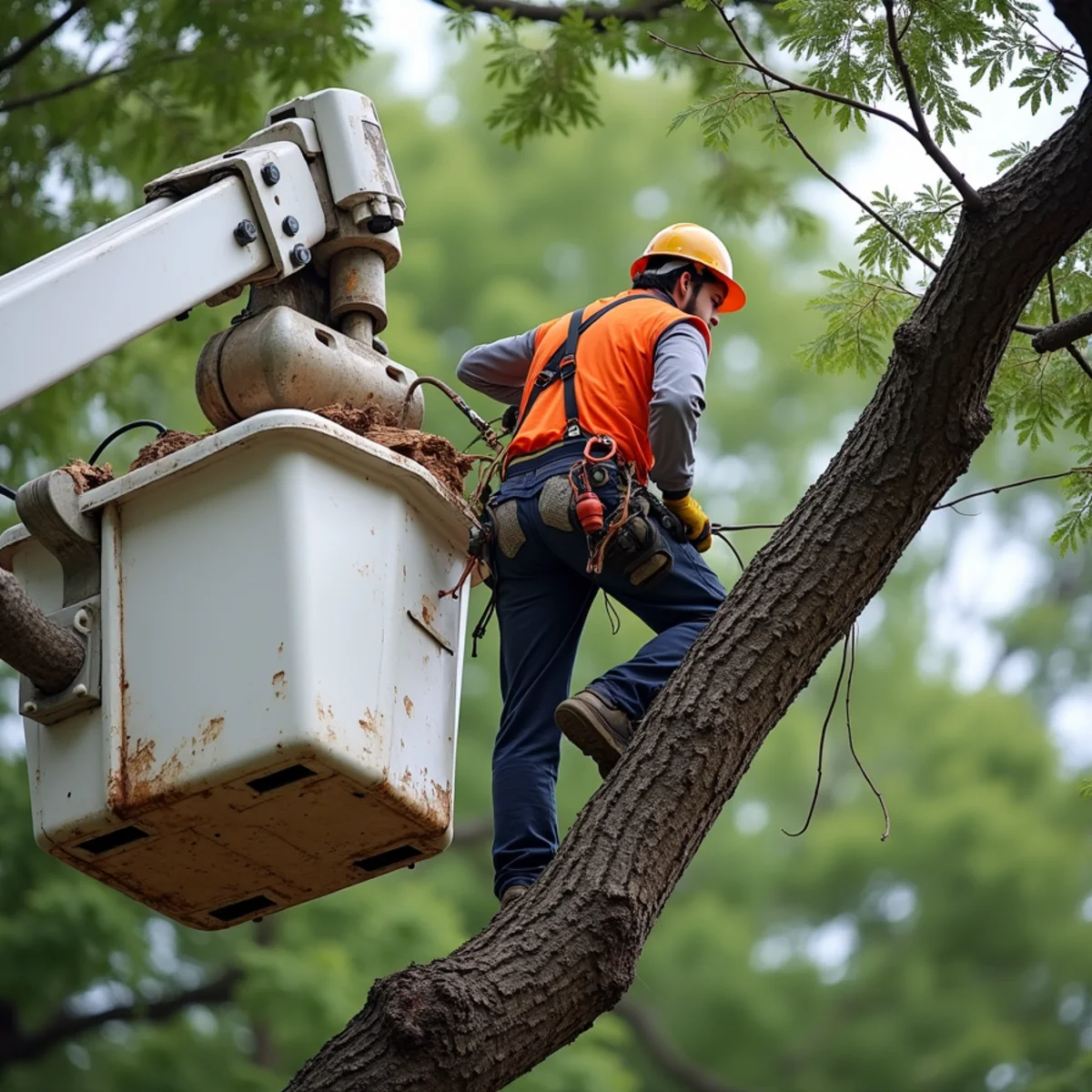
1. Remote Knuckleboom Grapple Saws: For dangerously brittle ash trees, our specialized grapple truck grips the tree limb mechanically with hydraulic jaws before a high-speed internal saw cuts through the trunk. The branch is then lowered safely to the ground without human hands touching the hazard zone. 2. Precision Crane-Assisted Picking: Where bucket trucks cannot reach, a heavy all-terrain crane anchors directly above the ash tree. The crane operator lifts cut trunk segments vertically into the air and swings them gently over the roof to the chipper staging area, completely eliminating ground impact on lawns or septic tanks.
If you have ash trees on your property showing thinning tops, bark flecking, or epicormic trunk sprouts in Concord, Kannapolis, Harrisburg, or Midland, do not wait until they become dangerous and expensive hazards. Call Cabarrus Tree Crew at (321) 478-0689 to schedule an immediate hazard evaluation.
Field Evidence & Visual Guide
Reference photographs illustrating the key stages, biological indicators, and field equipment discussed in this article.
Need Help With a Dangerous or Fallen Tree?
Call Cabarrus Tree Crew at (321) 478-0689. Our insured local teams answer 24 hours a day, 7 days a week.
Frequently Asked Questions
Can an ash tree be saved once it is infested with Emerald Ash Borer?▾
Why do tree services charge more to remove dead ash trees?▾
Does the Emerald Ash Borer attack other tree species like oaks or maples?▾
Can I keep the firewood from an ash tree that was killed by EAB?▾
Request an On-Site Tree Estimate
For immediate emergencies (tree on house, car, or blocked road), please call directly for fastest dispatch.