
Stump Grinding vs Stump Removal: Which Does Your Yard Need?
After cutting down a tree, should you grind the stump below grade or excavate the entire root ball with a backhoe? We compare equipment, lawn damage, costs, and replanting feasibility.
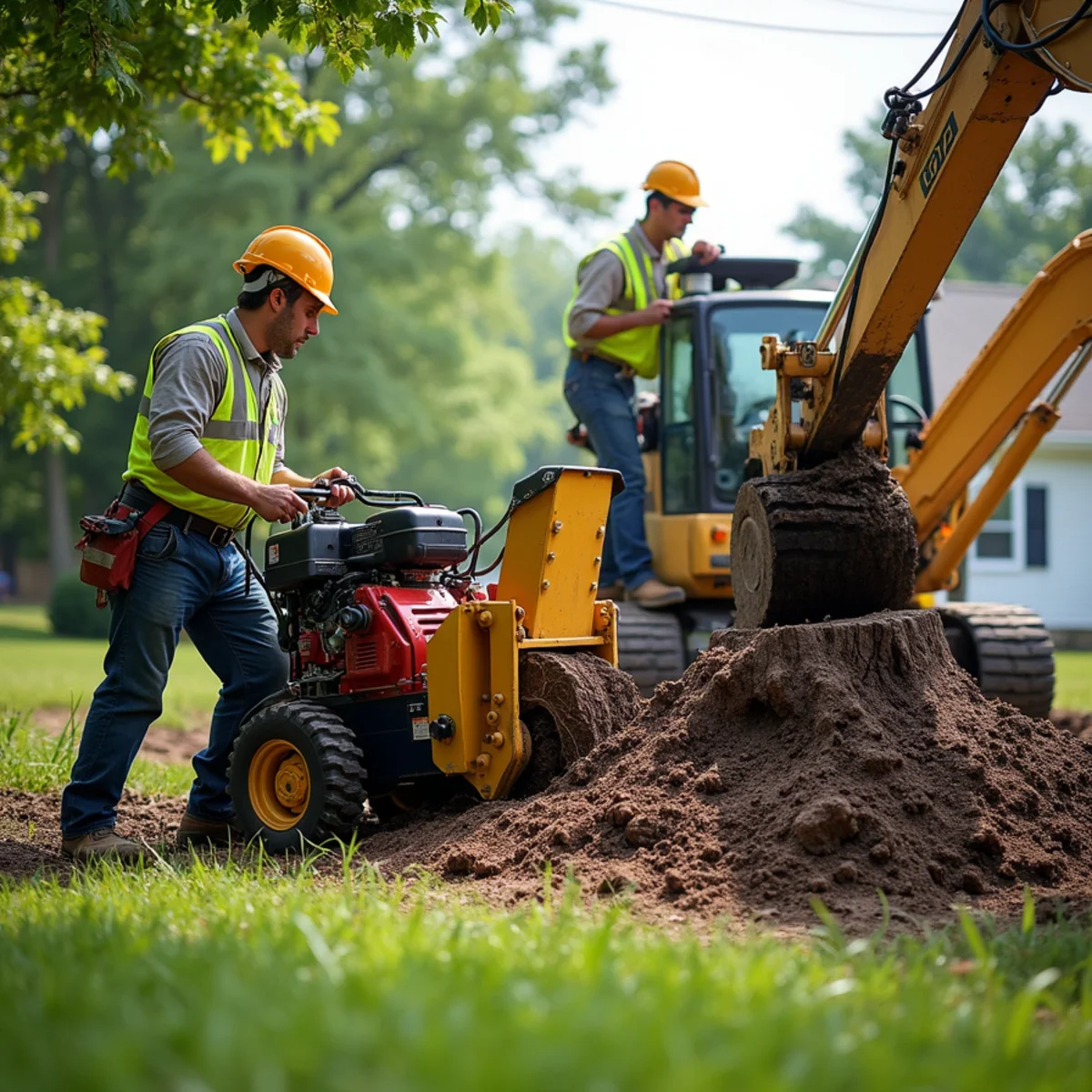
Once a hazardous pine or diseased hardwood is safely cut down and hauled away, homeowners face an immediate dilemma: what to do with the leftover wooden stump. Leaving a tree stump to rot naturally in your yard takes anywhere from 10 to 20 years in North Carolina's humid climate. During that time, the stump becomes an unsightly tripping hazard, damages lawnmower blades, and acts as a magnet for subterranean termites, carpenter ants, and honey fungus (Armillaria).
When soliciting bids to eliminate the stump, tree contractors will present two distinct service options: mechanical stump grinding or complete stump removal via excavation. Understanding the engineering, financial, and agronomic differences between these two approaches ensures you make the right choice for your landscape goals.
---
Root Anatomy in North Carolina Piedmont Red Clay
To appreciate the difference between grinding and excavation, you must first understand how tree root systems actually develop in Cabarrus County's dense Cecil red clay:
1. The Root Flare (Basal Collar): The swollen zone at the base of the trunk where structural wood transitions into primary roots. This is the hardest, densest portion of the entire tree. 2. Zone of Rapid Taper (Lateral Roots): Massive horizontal roots that radiate 4 to 8 feet outward from the trunk, just below the turf surface. These roots provide the tree's primary mechanical anchorage against Piedmont windstorms. 3. Subsoil Feeder Roots & Sinker Roots: In dense clay soils, trees rarely develop deep taproots because subsurface oxygen levels are low. Instead, 90% of roots occupy the topmost 12 to 18 inches of soil, spreading laterally two to three times the width of the canopy.
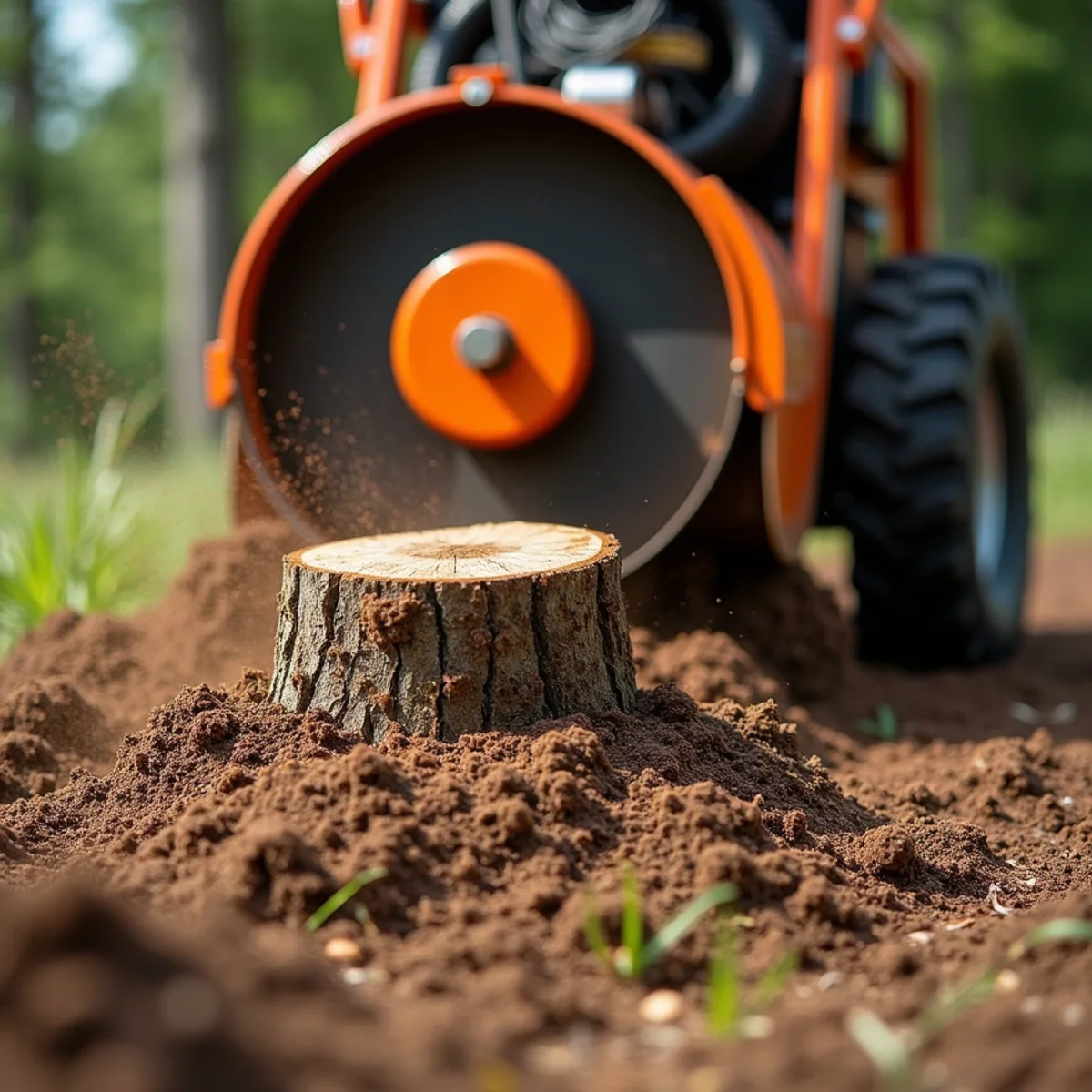
Stump grinding targets the root flare and main lateral collars, while excavation rips the entire structural root ball out of the earth.
---
Method 1: Commercial Stump Grinding Explained
Stump grinding is the standard, minimally invasive solution for residential lawns across Concord, Harrisburg, and Mint Hill.
- How the Machinery Operates: Professional tree services utilize dedicated, commercial hydraulic stump grinders equipped with heavy steel cutting wheels lined with tungsten carbide teeth. Spinning at over 1,500 RPM, the cutting wheel sweeps back and forth across the stump, slicing through dense hardwood fibers in micro-layers. - Grinding Depth Specifications: Standard grinding extends 6 to 10 inches below the surrounding turf grade, completely pulverizing the root flare, trunk core, and major surface lateral roots. For areas destined for deep garden beds or hardscape walkways, deep-grinding up to 14 to 16 inches can be performed. - Turf & Lawn Impact: Minimal. Modern self-propelled track grinders feature low-ground-pressure rubber tracks that distribute machine weight evenly, allowing crews to navigate standard 36-inch backyard privacy gates without rutting lawns or damaging irrigation lines. - The Residual Byproduct: Grinding produces a neat mound of organic mulch mixed with native red clay soil. This mixture can be utilized as weed-suppressing landscape mulch or hauled away by our crew. - Typical Cost Range: $150 to $490 per stump, depending on diameter, surface root spread, and site accessibility.
---
Method 2: Full Stump Removal (Excavation) Explained
Full stump excavation is an intensive civil earthmoving process rather than standard arboricultural maintenance.
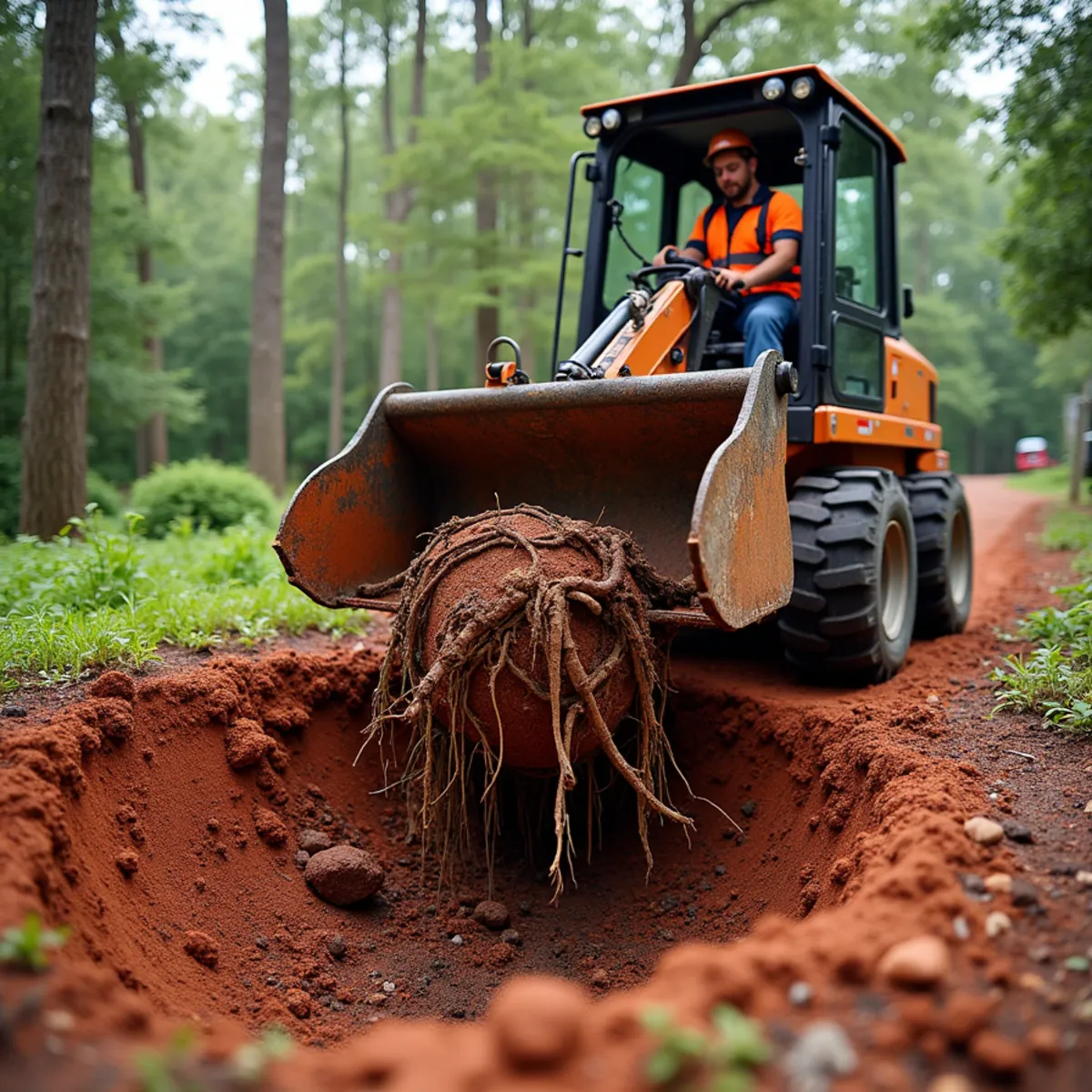
- Heavy Machinery Required: Extracting a mature oak or pine root ball requires bringing in an 8-to-15-ton excavator, backhoe, or compact track loader equipped with a heavy hydraulic ripping tooth or sorting thumb. - The Physical Process: The machine trenches around the entire perimeter of the root ball, ripping through thick anchoring roots, before using hydraulic leverage to pry the multi-ton root mass out of the ground. - Collateral Yard Disturbance: Massive. Excavating an 80-year-old oak stump creates an immense crater measuring 8 to 12 feet in diameter and 3 to 5 feet deep. Heavy steel tracks frequently tear up established turf and compact damp clay soils. - Disposal & Fill Dirt Demands: A single excavated hardwood root ball can weigh between 2,000 and 6,000 pounds, requiring a dump truck for transport to an industrial green-waste facility. Furthermore, restoring grade requires sourcing, dumping, and compacting 3 to 6 cubic yards of clean fill dirt and screened topsoil. - Typical Cost Range: $350 to $1,000+ per stump, with additional charges for dump fees, trucking, and site re-grading.
---
Side-by-Side Comparison: Grinding vs. Complete Removal
| Comparison Metric | Mechanical Stump Grinding | Full Excavation / Removal | |---|---|---| | Primary Machinery Used | Self-propelled hydraulic track grinder | Heavy excavator, backhoe, or track loader | | Typical Depth Reached | 6 to 10 inches below grade | 3 to 5+ feet (entire root ball extracted) | | Lawn & Landscape Impact | Minor; contained strictly to grind radius | Major turf rutting, cratering, and clay compaction | | Access Gate Requirements | Fits through standard 36-inch residential gates | Requires 8-to-10-foot wide machine access corridor | | Underground Utility Hazard | Low to moderate (shallower operational zone) | High (deep digging near gas, water, and power lines) | | Job Duration per Stump | 30 to 75 minutes | 3 to 6 hours + trucking and backfilling | | Best Application | Lawns, sod establishment, garden beds, patio borders | Building foundations, driveway paving, swimming pools | | Average Cost in Concord | $150 – $490 | $350 – $1,000+ |
---
Agronomic Guide: Replanting Grass & Trees After Grinding
Once your stump has been ground down below grade, restoring lush green turf or planting new ornamentals requires specific soil care:
1. Remove Excess Wood Shavings: Do not attempt to sow grass seed directly into fresh wood chips. The microorganisms that break down raw carbon wood fiber consume enormous quantities of soil nitrogen (nitrogen immobilization), starving young grass seedlings. Rake out the bulk of the mulch chips. 2. Backfill with Screened Topsoil: Fill the depression with a 50/50 blend of screened topsoil and organic compost, mounding it approximately 1 to 2 inches above lawn grade to allow for natural settling. 3. Fertilize for Nitrogen Balance: Apply a balanced, slow-release nitrogen lawn starter fertilizer to counteract any remaining subsurface wood decomposition. 4. Replanting Specimen Trees: If you wish to plant a new shade tree, do not plant directly into the center of the old stump hole. The deep underground taproot core takes years to decompose and will block downward root penetration. Instead, offset your new tree 4 to 6 feet away in fresh, undisturbed native soil.
Whether you need quick, low-impact stump grinding to reclaim your backyard lawn or heavy site clearing for a new construction project in Concord, Harrisburg, or Midland, Cabarrus Tree Crew has the specialized equipment to get the job done right. Call (321) 478-0689 to receive a free, upfront estimate.
Field Evidence & Visual Guide
Reference photographs illustrating the key stages, biological indicators, and field equipment discussed in this article.
Need Help With a Dangerous or Fallen Tree?
Call Cabarrus Tree Crew at (321) 478-0689. Our insured local teams answer 24 hours a day, 7 days a week.
Frequently Asked Questions
Can I plant a new tree in the exact same spot after stump grinding?▾
Do ground stumps ever grow back or produce shoots?▾
What happens to the underground roots that are left behind after grinding?▾
Can a stump grinder fit through my backyard fence gate?▾
Request an On-Site Tree Estimate
For immediate emergencies (tree on house, car, or blocked road), please call directly for fastest dispatch.